Not all those who wander are lost.

Latest

Parola del Giorno #5 – Tiramisu

Every once in a while I have a moment when something just clicks. And it’s always something incredibly obvious. Call it a brain fart or a blond moment (because by Italian standards I am actually considered blond, seriously) but for whatever reason it’s a connection I never made before. In retrospect it’s always “oh duh, how did i never think of that?” But in that one moment, that moment when it clicks, it’s an incredible discovery.

My most recent revelation happened on a gorgeous sunny afternoon in the park. I was having a picnic lunch with my ragazzo Romano (roman boy) and he was in the process of cutting some fruit. His sleeve was falling down and since his hands were sticky, he asked me, “Puoi tirarmi su?” Without registering the words he used, I helped him pull up his sleeve.

And then it clicked.

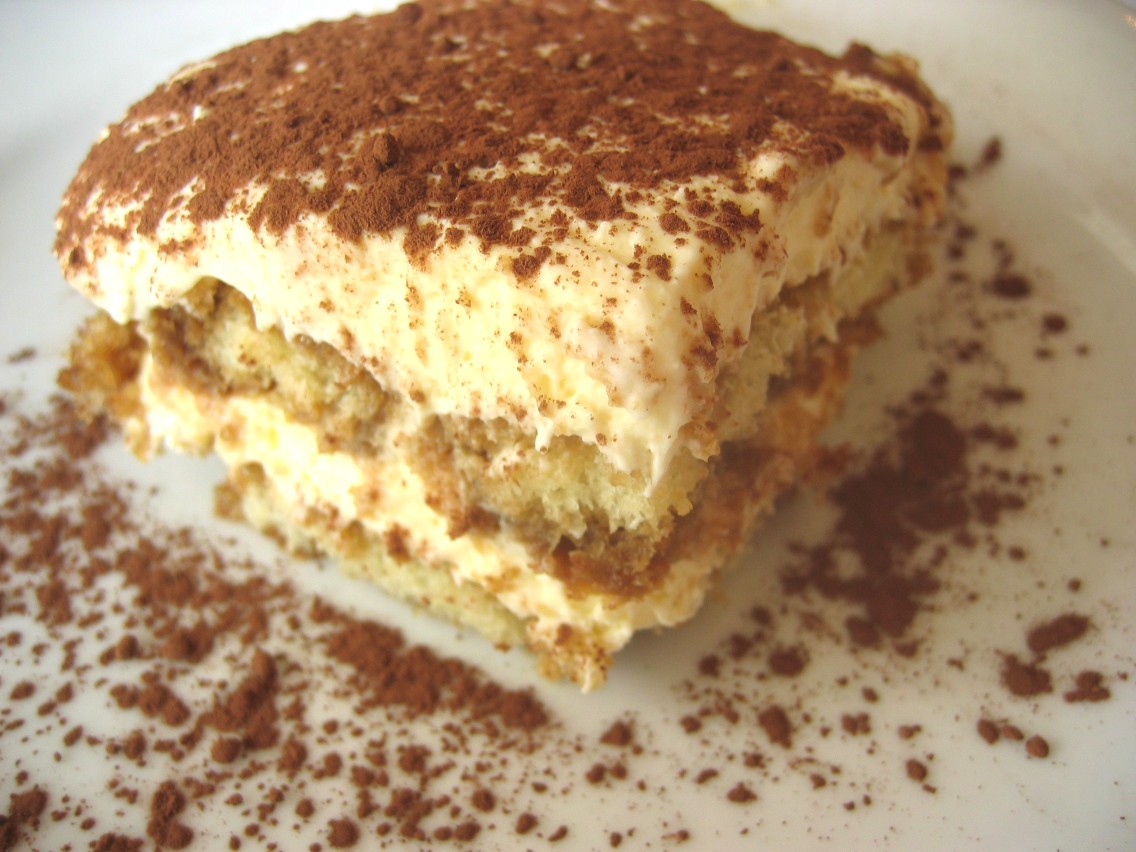
Tirare, the verb “to pull.” The imperative form tirami means “pull me,”  and su simply means “up.”  Tirami – pull me – su – up….tirami su…pull me up.  Tiramisu…….yummmmmmmmmmm.  The dessert that never sees an oven, impossible to consume without feeling instant bliss. Key ingredients include espresso, chocolate, mascarpone cheese, and a liqueur of your choice (my favorite is Chambord). Delicious. Or in the words of a dear friend in San Francisco, amazeballs.

So there you have it, my “oh duh” moment was the discovery that Italy’s most famous dessert is appropriately called a “pick-me-up” in Italian.

Day Trip: Underground Narni

Rome can be excruciating in the summer months. Scorching sun, scalding pavement and unbearable humidity – it truly is an inferno. So what do the Romans do?  They leave their city to the tourists and get the hell out of here. And being the groupie that I am, I followed suit. Last week, my Roman and I took the train one hour north to the Umbrian hill town of Narni.
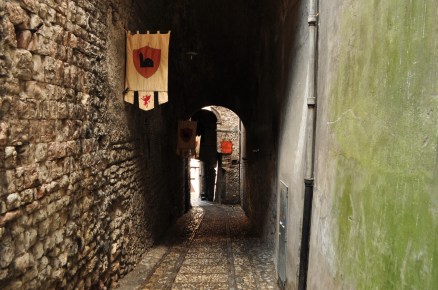
I had never heard of Narni. I suppose when competing against Assisi, Orvieto, Perugia, and Spoleto, Narni doesn’t exactly make the cut as an Umbrian “must-see.” But after having spent the afternoon wandering its charming medieval cobblestoned streets, I can truly say it made an impression.

Most notably was the Narni Sottoterranea – Narni Underground – tour, an eerie glimpse into Narni’s hidden past.  Our guide explained that these underground chambers were discovered in 1979 by a group of amateur spelunkers (a.k.a. bored teenage boys). The boys thought that there may have been something of interest beneath the existing Church of San Domenico and asked permission from a local farmer to knock down a wall of his chicken coop to start digging.
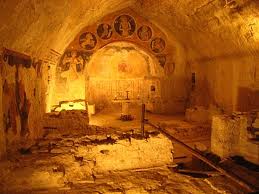
They were right. Almost immediately, they discovered an 8th century church with frescoed walls and ceilings. Further excavations have revealed human bones under the church floor – our guide casually informed us that it was a common practice to use dirt, rocks, and bones as filler. To describe it as unsettling is an understatement.  The last time I saw human bones, they were on display at a museum, protected by several inches of glass. I’m not exactly accustomed to walking over human skulls or femurs sticking out of the ground. This tour had already sent chills down my spine, and we had barely begun.

From the wall of the chapel, the boys continued digging and ended up in an ancient Roman cistern used to store the city’s water. The replicas of the tools used to ensure straight and level digging is testament to the Roman genius in architecture and design.

While the discovery of an underground church and ancient cistern would be enough for me, the boys thought there could still be more. They dug from the cistern along a corridor which emptied into a dark, windowless room.
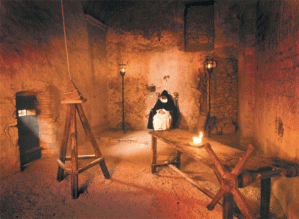
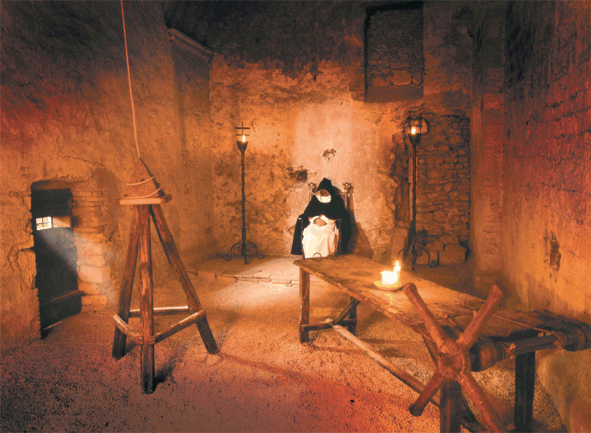
The Inquisition was here. That dark period of history in which prisoners suffered through inhumane and excruciating torture methods in the name of uncovering the truth. A few of the devices, including the infamous “stretcher,” were reconstructed to give us an idea of the setup of the Interrogation Room. The imprisoned was placed lengthwise on the table with his hands and feet bound, the ropes wrapped around a wheel. During the interrogation, the wheel would be cranked slowly and methodically to dislocate or completely sever the limbs. Amazing what the human race is capable of, isn’t it?

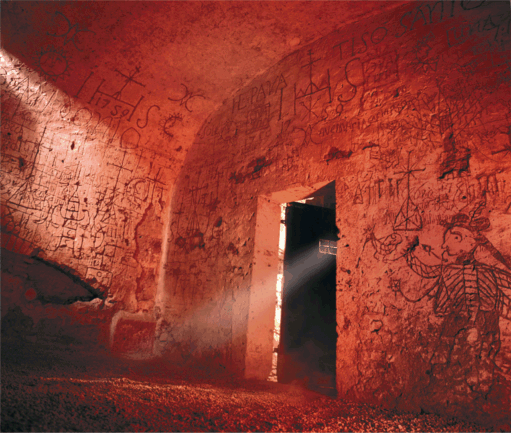
Adjoining the Interrogation Room was a small, dark cell which held prisoners for what must have seemed like an eternity. What our amateur spelunkers found in the cell was straight out of “The Da Vinci Code.” The walls and ceiling of the cell were completely covered in graffiti. Their artist was a soldier accused of ties to the Freemasons, equivalent to heresy in the eyes of the Catholic Church during the Inquisition.

My knowledge of the Freemasons is abysmal at best. But the repetition of cryptic messages, key numbers, and Masonic symbols in that room, along with their undeniable connection to Christianity, left me wanting to learn more.

Puzzles and cryptograms aside, one of the more interesting historical aspects of these two rooms is the amount of effort and luck it took to unveil their purpose. In 1979, there was absolutely no known documentation of their existence. Imagine digging underground with your friends, stumbling across a prisoner’s cell filled with Freemason symbols and then not being able to find anything in court documents, town records, history books, niente, zip, zilch, nadda. It seems as though the Catholic Church tried desperately to erase all evidence of this chapter in Narni’s history.

It took some pretty incredible coincidences involving the right people at the right place and time to locate documents detailing the trials which took place in that room. A team of researchers were able to link papers in the Vatican Archives with the Narni municipal archives. But oddly enough, it wasn’t until they were connected with a professor at Dublin’s Trinity College that they were able to really put the puzzle together. It really makes you think about what other stories have been hidden underneath Italy’s hill towns. Anyone feel like spelunking?

Spiaggia di Notte – Beach Nightlife

I have a lot to thank my grandmother for: my height, my love of crossword puzzles, my addiction to travel, my thirst for knowledge, and my appreciation of a good stiff drink. One thing I am less than thrilled about is my fair, Irish skin. Sure, I can build up a tan, but it takes several weeks (if not months) of patient sunscreen application…slowly but surely working my way from SPF 50+ to 30 to 20 and finally to 15. I will let Nivea thank my grandmother for that.

While I can’t partake in the #1 Italian Summer Pastime (spending hours at the beach worshipping the sun gods), I am lucky in that the Roman beaches are also fantastic at night. A quick ride on the trenino will take you to Ostia, and to a boardwalk packed with people taking a passeggiata – evening stroll. Stop by any of the beachfront establishments to enjoy a drink, dinner, or discoteca.

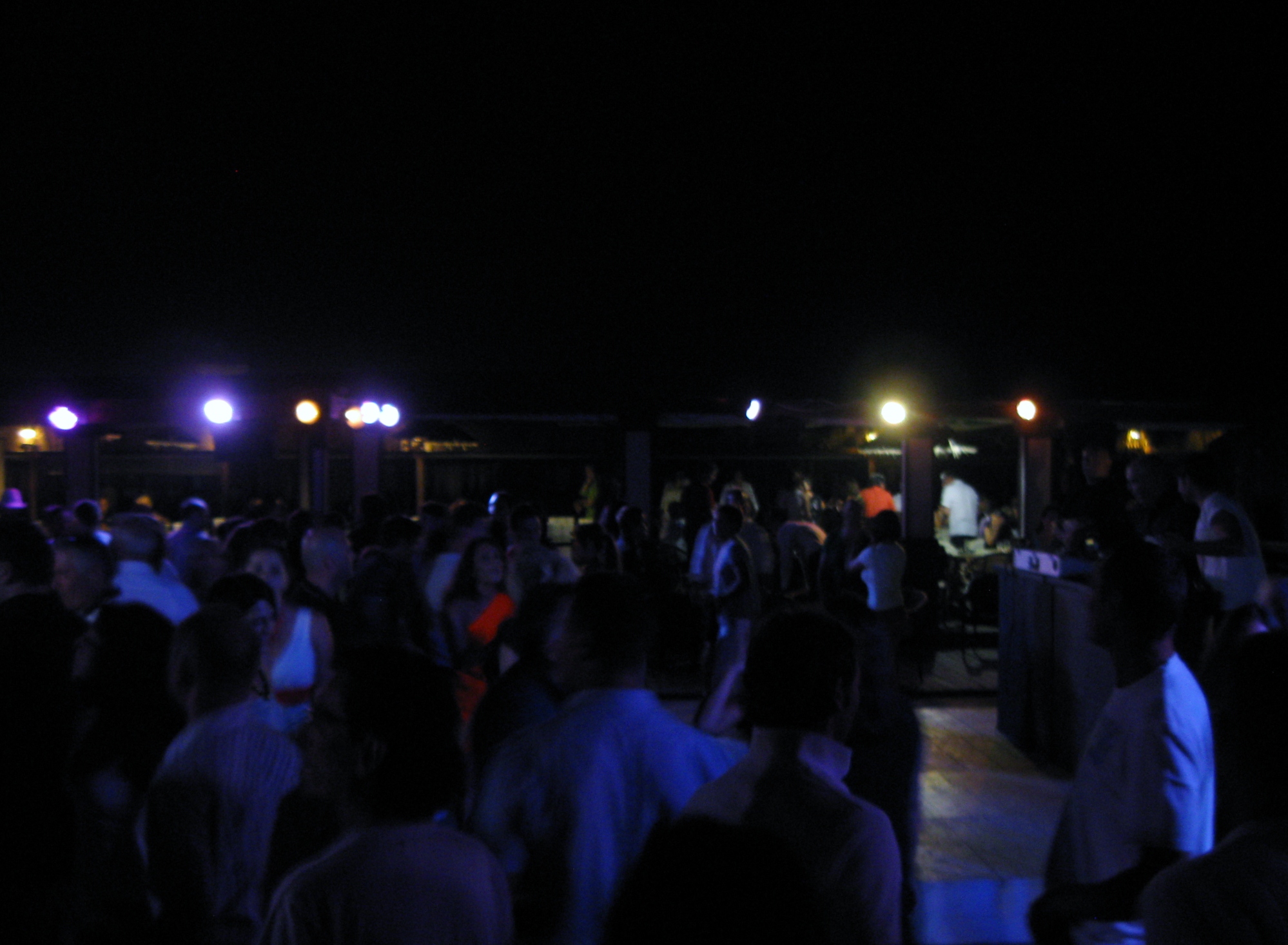
ImageIf you’re looking for a mellow evening and just want to chill on the sand with a group of amici, head to Vittoria Beach Bar. The bar itself is a mere 15 feet from the sea, and they’ve wisely chosen to keep their umbrellas open and lounge chairs out all night. Throw in some good music and the sound of Mediterranean waves and you have yourself a little slice of heaven. Let’s just say it’s swiftly becoming my late-night favorite.

And who wants to do laundry on a Sunday night when you can go to Apericena at Tibidabu Beach? It’s an aperitivo, turned into dinner – 15 euro gets you a drink and access to an all-you-can-eat Italian buffet, complete with prosciutto, salami, pizza, grilled veggies, and pastas. Once you’ve had your fill, head to the dance floor which really gets going at 10pm. Romans of all ages, shapes, and sizes get their groove on to the best of the 70’s, 80’s, and early 90’s. It is pretty much impossible not to dance when you see a 70+ year old man imitate his teenage grandson doing the YMCA. The fun ends at midnight, and you’re at home and asleep by 1am. A perfect way to end the weekend.

p.s. I am fully adjusted to the Italian practice of eating dinner at 9pm (or later), going to sleep at 1am, and waking up at 8am. In the case of a later-than-usual night, or one-too-many drinks, well…that’s what cappuccini are for.

Parola del Giorno #4 – ino

And now onto the fun suffixes that have proven to be crucial for the expansion of my Italian vocabulary:

Parola del Giorno #4: the little “-ino” or “-etto”

Think about the English use of “-y” or “-ie” to make something small, young or cute…as in “it was an itsy-bitsy-teenie-weenie yellow polka dot bikini.” But imagine a situation where you could add that “-y” suffix to any word and not sound like a mother blubbering over her child in that affectionate, yet somewhat gag-worthy, “wuvey-dovey” way.

Enter the Italian -ino or -etto. Two diminutive suffixes that serve as perfectly rational, grammatically correct ways to make an object smaller in size or age. And best of all, you don’t sound like a fool when you use them!

  • My roommates pay much more for their rooms as I have the cameretta – the small room – in our apartment.
  • Despite the fact that my mammina – little mamma – is 5’1″ on a good day, I am 5’9″ and tower over most Romans (the height comes from my father’s side).
  • When going to my boyfriend’s house, I take the trenino – the little train – which is used by commuters to get from the city center to the surrounding suburbs. (and yes, it’s official. Despite my best efforts, I’ve fallen victim to the classic story of an Italian stealing my heart)
So enough with the baby talk already. Instead of piggy-wiggy or doggy-woggy, a simple pig-ino or dog-ino will suffice. Or if the “pig” in question is a reference to the toe of a child, let’s just call it a toe-etto.

Parola del Giorno #3 – the un- “s”

I am definitely not a linguist, but I must admit that I have developed quite an enthusiasm for prefixes and suffixes. I never considered what an impact they could have on someone who’s learning a language. My Italian vocabulary is growing at a fairly steady rate these days, but with the simple addition of 4 new prefixes or suffixes it has quadrupled in size.  I’ve struck language gold, and I thought I’d share the wealth:

Parola del Giorno #3: the un- “s”

The “s-” prefix is similar to the English “un-”  or “dis-” in that it basically turns any word into its opposite.

  • When gambling or playing sports, it is always better to be fortunato (lucky) than sfortunato (unlucky).
  • Don’t forget to blocca (lock) the door on your way out. If you forget your 4-digit code, it’ll be impossible to sblocca (unlock) your iPhone.
  • In the morning, si trucca (we put on makeup).  At night, si strucca (we remove makeup).

And finally, a personal favorite: sgrassatore. The root “grasso” means fat, and the suffix “-ore” turns it into an action done by someone or something. Add that “s-” to the mix and you have something that un-greases. So when your attempt at Spaghetti alla Carbonara goes all wrong, you’ll need a sgrassatore (a degreaser) to help you clean the oil splatter off the counter.

In an effort to de-fragment my brain, I have started applying the “s” prefix to English words.  As in “A.S. Roma has had a slucky season” or “My hands are full. Could you slock the door for me?”

Try it out at home, I promise it’ll make your conversation a little more sboring.

Parola del Giorno #2 – post-menapausa

Can you still call it a Parola del Giorno – word of the day – if you don’t post #2 until four months after #1 posted? I vote yes. Therefore, I bring you…

Parola del Giorno #2: post-menopausa

While the literal translation is obvious, I have been informed that the term “post-menopausal” has more comical alternate use. I discovered its meaning during a lesson with my 60+ year old, cigar-smoking, Orthopedic Surgeon, pre-intermediate student. Yesterday we were talking about the Spice Girls (don’t ask) and their various Spice names.  He was not familiar with the word ‘ginger,’ so I had to explain that while it is actually a spice, Ginger Spice was so-named for the fact that she’s a redhead.

The doctor proceeded to tell me that redheads are called ‘post-menopausal’ in Italian. Random, I know. But bear with me.

Have you ever seen a redheaded Italian? Not likely. Along with freckles, fair skin, and the ability to talk without gesturing, the red hair gene was weeded out of the Italian gene pool long ago. It can only be accomplished by chemical means, which presents another problem for the Italian Ginger-Wannabe: any red dye would be masked by the typical dark brown-to-black Italian hair color tones. Therefore, the only ‘true’ redheads are the women who’ve allowed their hair to turn grey or white before attempting the red dye. Or in the words of the doctor, “The only Italian women with red hair are those who have gone through menopause.”

Post-Menopausa: Italian slang for ‘ginger’


Disclaimer: I did absolutely no research or fact-checking on this and I have no idea if this is a well-known or commonly-used term. It could just be the doctor’s quirky sense of humor. Regardless, it was too good not to share.

Mi dispiace – I’m sorry

Today is March 15th, the Ides of March, and it has been well over a month since my last post. The hiatus this time around is not due to writer’s block, it’s simply that there are not enough hours in the day. I’ve been dividing my time between teaching (score update…Miss Katie: 12, Italian 3rd Graders: 4), showing my sister around (yay for visitors!!!), keeping my New Year’s Resolution (read 1 book in English & 1 in Italian every month), and trying to speak more Italian than English every day.

However, the biggest culprit for my lack of updates is the fact that spring has sprung in Rome. Trees are blossoming, the snow has melted, the markets have strawberries on sale, roof-tanning has commenced, the flea market vendors have started selling pastel-colored clothing, and this Wanderer is twitterpated (editor’s note: if you don’t know what that means, it’s time to watch “Bambi” again). Long story short, I’ve been distracted.

However, I am still a list-maker; I have a mile-long list of topics I want to write about. They include:

  • the origin of the words “cappuccino” and “graffiti”
  • the Italian Grandmother
  • a Carbonara recipe, courtesy of one of my students
  • creative ways to make money in a down economy
  • dreaming and sleep-talking in a foreign language
  • the benefits of living with Art Historians
  • la bella/brutta figura
  • the derby
  • Ostia Antica, Viterbo, Cesano, and Spoleto day trips
  • International Women’s Day – Italian style
  • Roman pollution control
  • traffic violations & fines
  • heating & gas bills
  • ………….and the list grows every day

I’m not lacking in inspiration, I’m simply lacking in time. I live in one of the most spectacular cities in the world, rich with art, history, architecture, mythology…and it’s sunny and 72 degrees outside. Can you blame me for not writing?  Anyway, I’ll try to be better about writing more frequently. But for now, take a look at one of the best-preserved bathrooms of ancient Rome (in Ostia Antica):

Roman Snow Photos!!

I just finished editing and uploading my favorite photos of last week’s Roman snowstorm. Check out my photo gallery: https://wanderingbychoice.com/photos/roman-snow/

Foto del Giorno #2 – Ancient Bricks

I’ve taken my fair share of history courses and at this point I’ve walked through the Roman Forum and Colosseum more times than I can count. Yet I find that as I wander throughout this city, I regularly learn something fascinating about the ways of the Ancient Empire:

While walking through one of the oldest churches in Rome, we stumbled upon a wall displaying some interesting bricks from the 2nd century A.D. My roommate (an expert on all things Rome) informed me that these bricks were “stamped” for taxation purposes and were placed every 10-15 bricks in a wall. The stamp would typically indicate the name of the Brick Maker, the brickyard where it was produced, and the name of the current Roman Consul. Since the Roman Consul changed every year, these stamps have given archaeologists the ability to precisely know the date a particular structure was erected. Brilliant.

La Befana

The 26th of December is often a bit of a let down in America, all this excitement and energy building up to Christmas and then in the blink of an eye it’s finished.  Over the following week, lights and decorations are taken down, store displays are back to normal, and the Noble Fir is removed from the Endangered Species list.

Not in Italy, oh no. Christmas lights, markets, nativity scenes, and trees are left exactly as they were on December 25th.  There really are 12 days of Christmas you see, and Italians remain in the Christmas spirit for all 12 days until January 6th, the Epiphany – the arrival of the Three Kings (of Orient are, bearing gifts, they’ve traversed afar) in Bethlehem.

And what Catholic holiday is complete without a middle-of-the-night-down-the-chimney visit from an imaginary figure?

Enter La Befana, an old woman with a crooked smile. For many Italian children, including my 24-year old Roman roommate, the excitement and anticipation of La Befana’s visit greatly exceeds that of Babo Natale – Santa Claus.

On the eve of the Epiphany, she arrives barefoot via broomstick and she enters every child’s house through the chimney, seeking the newborn Son of God.  While Babo Natale places gifts under the tree, he leaves the task of stuffing the stockings to La Befana: a lump of coal for naughty children and candy for good children.

This morning, I woke up to find my very first stocking from La Befana, even she recognizes that I am becoming more a part of this culture every day.

And yes, I’ve been good this year.

Day Trip to Frascati

December 29th marked the 9-month anniversary of the day I left America in search of something new, something better, something a little more “me.” And 9 months later, I still have absolutely no idea what any of that actually means. But being my father’s daughter, I am a stubborn ass; I refuse to step foot back on American soil until I figure “it” out.

I’ve been in Rome now for over 4 months, and in those months I have accomplished quite a bit. I’ve mastered the public transportation system (metro, bus, tram and train), and I firmly stand behind my boss’s statement, “it’s impossible to get anywhere in less than 30 min, but you can pretty much go everywhere in an hour and a half.” I’ve scouted out the best pizza, gelato and aperitivo joints. I’ve learned the English language (and how to teach it). I’ve discovered that old Roman women have very strong opinions about wearing scarves and socks once the weather turns cold (more on this later). And most importantly, I’ve become a local – I am part of a community in this crazy city.

While I love the culture, cuisine, and chaos of urban life, after a while it sucks the energy out of me. I am the sort of person who can’t walk for too long on pavement before it wears me down; and apparently cobblestones are no exception. I have always been connected to nature; in order to recharge and maintain clarity, I need open space, fresh air, the smell of pine, and the sound of silence. During the past few months, I’ve been so preoccupied with getting myself set up that I forgot to seek out my retreat, and that lack of “me time” was really starting to weigh heavily.

So with that in mind, I decided to celebrate my 9-month anniversary with a day trip to one of the small towns outside of Rome. As I am officially in the business of not making plans, my approach to a “non-plan” for a day trip went something like this:

The Strategy:

  1. Look at a map.
  2. Find small towns around Rome, preferably on the regional train line.
  3. Pick one that looks familiar (or throw a dart, whichever is least likely to result in injury)
  4. Wake up earlier than 9am and go to the train station.

No plan, no research, no agenda. Wandering at its finest.

The Choice: Frascati.

Things I Knew about Frascati:

  1. Most vini della casa – house wines – in Roman restaurants are from this area
  2. There is apparently a local obsession with Porchetta, no idea why.

Wine and Pork?  Okay, twist my arm.

A 30-minute train ride and 1.90 euro later, I found myself in a quiet town perched high in the hills southeast of Rome. Frascati is darling – local artisans sell their goods along the main street, alleyways wind into small piazzas, locals take an afternoon stroll at what seems to be a snail’s pace. And best of all, waiters & restaurant owners don’t hassle you claiming that theirs is the “best pasta/panino/pizza/gelato… in town.”

Life in Frascati appears to be a bit more mellow and peaceful, not unlike what I experienced in Lucca over the summer. It’s the way of life that we Americans always have in our mind when we think of Italy: la Dolce Vita e Dolce Far Niente – the sweet life and the sweetness of doing nothing. Frascati was precisely the breath of fresh mountain air that I’ve been craving; I can now say that I’ve found my retreat from Rome.

Nine months and still going strong: Onward!

Oh, the wine and porchetta were both phenomenal = Happy Katie.

Ciao 2011 – it’s been an adventure

It’s 5pm on New Year’s Eve, and I am relaxing, just trying to conserve energy in preparation for tonight’s antics: multi-course dinner at home with my moglie – wife – and her boyfriend (yes, you read that right), followed by drinks with friends and wandering to the ancient Imperial Forum for the Negramaro – italian rock band – concert and fireworks. I hope I survive, something tells me that Romans, alcohol, and fireworks don’t mix.

Anyway, I am laying in my roman bed, in my roman apartment, texting in Italian on my ghetto roman phone, and thinking about how much my world has changed. This time last year, my world was Portland – a gorgeous city with my incredible family and amazing friends. My world was NCAA and NFL football games, summer barbecues, road trips, workout buddies, and line dancing. It was a world of comfort, support, and unconditional love. It was a life that I adored.

Portland is amazing. But as one of my best friends said, “For you, Portland is a cage. And no matter how beautiful the cage, at some point every bird needs to fly.” This time last year, I found my wings. I flew from Portland to Istanbul to Olympos to London to Lucca to Dubrovnik to Mostar to Rome on a one way journey. I allowed myself to dream beyond the beauty of Portland, beyond the comfort of home. As a result, my world is larger than it has ever been.

It now consists of Islamic mosques and Renaissance cathedrals, of paragliding and cliff jumping, of Olympos and Butterfly Valley, of ethnic cleansing in the Balkans and riots in San Giovanni, of Lucchese dialect and Roman slang, of stargazing and kaifing. In my world, I am now a foreigner, a wanderer, a bartender, a nanny, and an English teacher. In my world, I drink Turkish tea in the afternoon and Grappa or Limoncello after dinner, I eat menemen and carbonara, I dream in two languages. In my world, I am an aunt or a sister in the Gelli and Pierallini families.

Without a doubt, my world has grown and will continue to grow at an exponential rate. It has truly been an extraordinary year and I’m excited to see what curveballs 2012 decides to throw.

Buon Anno – Happy New Year!

This slideshow requires JavaScript.

Buon Natale

Buon Natale from the heart of the Catholic Church (photo above: Jesus & his posse on the roof of St. Peter’s Basilica)

This slideshow requires JavaScript.


Natale on Via dei Condotti

Via dei Condotti is by far the most expensive street in Rome. It is where the Armani, Gucci, Fendi and Prada mannequins face off, looking as if they’ve just stepped off the runway (and yes, they are judging you for your knock-off jeans/purse/boots/whatever).

However, on the first Saturday of December, it welcomes visitors of all brands and sizes to participate in the festivities as it kicks off the holiday shopping season, complete with the Carabinieri (military police) marching band. The shops collectively choose a particular company as their “theme” for decorations; Mercedes-Benz has that honor this year.

Over 400 stores around the historic center have chosen to participate in “Roma in Luce” – Rome in Lights – and the city simply spectacular. With chestnuts roasting on every corner, Christmas trees in every piazza, and mulled wine offered at aperitivo, it’s hard not to be in the Christmas spirit.

This slideshow requires JavaScript.

Foto del Giorno #1

Wandering Photo of the Day: a commuter’s sunset

I suppose a work commute to the suburbs isn’t so bad when you have a beautiful sunset like this welcoming you on your way back home…
Monte Mario. A quartiere – neighborhood – in the northern part of Rome. Its train station is along the regional line connecting the Centro Storico – historic center – to the surrounding neighborhoods of Rome. It also serves to transport this Wanderer to the houses of her students.